Saturday, March 26, 2016

Which has a better climate - Victoria or Toronto?

Our climate smackdown series continues.  Next we'll compare Victoria's climate to Toronto's.  All the numbers below are based on stats for Victoria Gonzales and for Toronto City (not Airport numbers).  

Let's start with precipitation.  On an annual basis, Toronto gets about 30%  more precipitation than Victoria - 831 mm in Toronto versus 641 mm in Victoria.    If you split that into rain and snow, Toronto gets about 20% more rain than Victoria (741 mm vs. 621 mm) and about 6 times as much snow (122 cm vs. 20 cm).  

Besides getting more precipitation, Toronto also differs from Victoria in the seasonal pattern of its precipitation.  While Victoria has a very distinct rainy season (late fall and winter) and dry season (late spring and summer), precipitation in Toronto is more or less the same year round.  You can see the difference in the chart below.  Victoria gets about 50% more precipitation than Toronto in November, December, and January (318 mm vs. 207 mm).  Precipitation levels are about the same in both cities during the transitional months of February and March, and again in October. During the six months from April to September, Victoria gets less than one third as much rain as Toronto (137 mm vs. 451 mm).  The difference is particularly pronounced during June, July, and August when Victoria gets less than one quarter as much rain as Toronto.  One of the big reasons for the much drier summers is the lack of thunderstorms in Victoria: Toronto averages about 28 days annually with thunderstorms compared with about one day in Victoria.


We can also compare the frequency of precipitation.  For example, Victoria averages 133 days per year with measurable precipitation versus 145 days in Toronto. The chart below compares the % chance of measurable precipitation on any given day throughout the year.  Again, you can see there is much more seasonal variation in Victoria, ranging from 60% chance during November and December to a 10% chance in late July and early August.  The likelihood of precipitation has a much smaller seasonal range in Toronto, from about 50% in the winter down to about 30% in late summer.  The chance of having a day with measurable rainfall is lower in Victoria from early April until early October.  The gap is especially wide from mid-July until mid-August: if you're planning an outdoor event at this time of year it's about three times as likely to get rained out in Toronto compared with Victoria. 


As noted earlier, Toronto gets more than 6 times as much snow as Victoria, with an average 122 cm annually in Toronto versus 20 cm in Victoria.  Snow also stays on the ground much longer in Toronto, with an average of 68 days each winter with at least 1 cm of snow on the ground compared with 5 days for Victoria.  Although on average, Victoria gets much less snow, it has had more really large snowfalls than Toronto.  The biggest one-day snowfall in Toronto in the past 100 years was 48 cm in December 1943.  In Victoria, there have been three one-day snowfalls that exceeded 50 cm, in February 1916, February 1923, and December 1996.  

Victoria is also sunnier than Toronto, with an average 2,203 hours of sunshine annually versus 2,066 hours for Toronto.  Victoria averages 315 days per year with at least some measurable sunshine, leaving an average 50 days per year with no sun.  Toronto averages 60 days annually with no measurable sunshine.  The chart below shows the % of possible sunshine, by month, throughout the year.  Victoria gets a slightly lower percentage of possible sunshine than Toronto during the winter, from December until March.  However, from April to October Victoria gets a higher percentage of possible sunshine.  The difference is especially noticeable in July and August, when it's sunny nearly 70% of the time in Victoria compared with about 58% in Toronto. 


Now let's compare temperature.  While Victoria has  much greater seasonal variation in precipitation and sunshine compared with Toronto, the opposite is true for temperature.  The chart below shows the average daily maximum temperature in Victoria versus Toronto.   Average maximum temperatures in Victoria range from 7 degrees in December to 21 degrees in July - a difference of about 14 degrees.   In contrast, maximum temperatures in Toronto range from -2 degrees in January to 27 degrees in July - a range of 29 degrees, or more than twice the range experienced in Victoria.  The average daily maximum temperature is warmer in Victoria for half the year, from mid-April to mid-October.  The greatest difference is in mid-January, when the average daily maximum is nearly 10 degrees warmer in Victoria compared with Toronto.  In contrast, in July the average daily maximum temperature is 6 degrees cooler in Victoria compared with Toronto.  (It should be noted that the numbers for Victoria are based on Victoria Gonzales, located right on the Strait of Juan de Fuca.  Away from the Strait, at the University of Victoria, the average high temperature in July is 23.8 degrees, nearly 3 degrees warmer than Gonzales).  


The next chart shows average daily overnight low temperatures in Victoria versus Toronto.  The pattern is very similar to the daily high temperatures discussed above: there is a much greater seasonal range in Toronto, with average overnight lows ranging from -8 degrees in January to nearly 19 degrees in July (a 27 degree range).  In Victoria, overnight lows range from 3 degrees in December to 12 degrees in August (a 9 degree range, only one third of the range in Toronto).  Average overnight lows in Victoria exceed those in Toronto for an even longer period than the daytime highs do, from early October to early May.  In Toronto, average overnight lows are below 0 from the beginning of December to the end of March, and Toronto averages 101 days per year with overnight lows below freezing.  Victoria averages less than 10 such "frost days" per year.  


The coldest temperature ever recorded in Victoria was -15.6 degrees in December 1968.  On the other hand, Victoria has experienced 7 winters in the past 118 years when the temperature did not drop below freezing.  The coldest temperature recorded during the winter of 1925-26 was +1.1 degrees, making it the highest low temperature for any winter on record.  In Toronto, the lowest temperature ever recorded was -32.8 degrees.  The highest low temperature for any winter in Toronto was -13.1 degrees during the winter of 2005/06.  In Victoria, the average coldest temperature each winter is -4.8 degrees, while the average winter low temperature for Toronto is -20 degrees.  

The record maximum  temperature for Victoria is 36.0 degrees versus 40.6 degrees for Toronto.  Toronto gets an average of 50 days per year above 25 degrees and 13 days above 30 degrees.  In contrast, Victoria gets an average of just 8 days per year above 25 degrees and 1 day per year above 30 degrees.  Again, if you measure the temperature away from the Strait of Juan de Fuca (at the University of Victoria), it's more like 27 days above 25 degrees and 3 days above 30 degrees.  Either way, Victoria's summers are much cooler than Toronto's - and no humidity!

So who wins the climate smackdown?  I think it's pretty clear that Victoria wins in terms of more sunshine, less rain, and much less snow.  It also wins for having much milder winters.  However, the summer temperatures are more subjective.  Being a Victoria native, I love the cool summers here, but I know that some people prefer the heat in the summer.  Give me cool, dry and sunny over hot and muggy any day, although it would be nice to have a few more warmer summer evenings in Victoria!  Overall, I still have to give this one to Victoria.

Sunday, March 20, 2016

Which has a better climate - Vancouver or Victoria?

I thought I'd start a series of posts that compare Victoria's climate with the climate in other cities - call it a climate smackdown.

First up, is Vancouver.  I think most people in Victoria are aware that our climate is a lot drier and sunnier than Vancouver's thanks to the rain shadow, but I want to take a look in a bit more detail.

Let's start with precipitation.  As the chart below shows, Vancouver does get a lot  more precipitation than Victoria - an average of 1,560 mm annually vs 641 mm for Victoria.  That's almost two and a half times as much rain!  Vancouver gets more precipitation than Victoria throughout the year, but there are important variations.  During the late fall and winter rainy season from October to February, Victoria gets a little under half as much precipitation.  However, during the drier months, the difference is even greater, with Victoria getting less than one third as much rain as Vancouver between March and September.


The difference between Victoria and Vancouver is very distinct.  In both cities, precipitation has been recorded for almost 120 years.  During that time, the wettest year in Victoria was 1933, when 945 mm of precipitation was recorded.  Not only is Victoria's wettest year on record still drier than an average year in Vancouver (1,560 mm), but it is drier even than the driest year every recorded in Vancouver (962 mm in 1929).

We can also compare the frequency of precipitation.  For example, Victoria averages 133 days per year with measurable precipitation versus 166 days in Vancouver - so Vancouver averages about an extra month's worth of rainy days each year.  We can go even further and look at the number of hours with precipitation: Victoria averages 1141 hours while Vancouver averages 1658 hours - about 45% more.  Based on these numbers, most of the difference in total annual precipitation is not primarily because it rains more frequently in Vancouver, but because, when it does rain in Vancouver, the rain is on average nearly twice as heavy as when it rains in Victoria.

It's interesting to note that despite Vancouver having a reputation that it "rains all the time", the average 1658 annual hours with precipitation amounts to only about 19% of the time, while it's dry 81% of the time.   In Victoria, there is precipitation just 13% of the time while it's dry 87% of the time.  Even in the wettest winter month (December), it's dry 69% of the time in Vancouver and 78% of the time in Victoria.  During the driest month (July), it's dry 92% of the time in Vancouver and more than 95% of the time in Victoria.  The chart below shows the frequency of precipitation in Victoria and Vancouver throughout the year.


Vancouver gets nearly twice as much snow as Victoria, with an average 37 cm annually in Vancouver versus 20 cm in Victoria.  Victoria is more than twice as likely than Vancouver to experience a winter with little or no snow.  Over the past 30 years, Victoria has experienced 14 winters with less than 5 cm of snow for  the entire winter, compared with just 6 such winters for Vancouver.  Snow is also more likely to stay on the ground longer in Vancouver, with an average of 8 days each winter with at least 1 cm of snow on the ground compared with 5 days for Victoria.

Victoria is also sunnier than Vancouver, with an average 2,203 hours of sunshine annually versus 1,825 hours for Vancouver.  Victoria averages 315 days per year with at least some measurable sunshine, leaving an average 50 days per year with no sun.  Vancouver averages 76 days annually with no measurable sunshine - about 50% more than Victoria.  As with precipitation, the difference in annual sunshine between Victoria and Vancouver is quite distinct.  The cloudiest year on record in Victoria - with just 1,948 hours of sunshine recorded way back in 1914 - was still much sunnier than the average for Vancouver.  Conversely, the sunniest year on record in Vancouver - 2,109 hours recorded in 1987 - was still much cloudier than the average for Victoria.

Up to now, I think you can safely say that Victoria is clearly winning this climate smackdown.  But now we take a look temperature, and things become more complicated.  The chart below shows the average daily maximum temperature in Victoria versus Vancouver.  The average high temperature in Victoria is almost a degree warmer than Vancouver during the winter months, and it's about the same during the fall and early spring, but it is significantly cooler during the late spring and summer.  It's about 2 degrees cooler in July and August - averaging 20.5 degrees in Victoria versus 22.4 degrees in Vancouver.  The numbers in the chart are based on Victoria Gonzales, located right on the Strait of Juan de Fuca.  Away from the Strait, at the University of Victoria, the average high temperature in July and August is 23.7 degrees - more than 3 degrees warmer than Gonzales.  Nonetheless, Victoria is known for its relatively cool summers - particularly in the southern part of the region near the Strait of Juan de Fuca.  The Vancouver numbers are for Vancouver Harbour.  While this is also near the water, the Strait of Georgia is not nearly as cool as the Strait of Juan de Fuca during summer, so the cooling effect is less.  However, inland locations in the Vancouver region do have summer daytime highs that are 1-2 degrees warmer than the Vancouver Harbour numbers shown.


The next chart shows the average daily overnight lows in Victoria versus Vancouver.  Again, Victoria is nearly a degree warmer than Vancouver during the winter months.  Another way to look at this is to compare the average numbers of days each winter when the overnight low drops below freezing.  Vancouver averages almost twice as many "frost" days: 18.0 versus 9.5 for Victoria.  Victoria has experienced 7 winters in the past 118 years when the temperature did not drop below freezing for the entire winter.  Vancouver has never recorded a frost-free winter.  But while Victoria has warmer overnight lows in the winter, Vancouver has much warmer overnight lows during the summer.  During July and August, Victoria has an average overnight low of 11.8 degrees versus 14.4 degrees in Vancouver.  Victoria is definitely not known for its sultry summer nights!  Of course that could be a good thing if you don't have air conditioning!


What makes a good climate is quite subjective, but I think that overall Victoria beats Vancouver.  The drier, sunnier weather, with less snow and frost more than offsets the sometimes cool summer days and chilly summer nights.

Thursday, March 3, 2016

A Look at Winter 2015/16

The end of February is also the end of meteorological winter (December to February).  So what was winter like in Victoria?

First, it was mild.  The mean temperature over the three month period was 6.8 degrees - a full degree above the 30-year average of 5.8 degrees.  Winter 2015/16 tied for the 7th warmest winter on record in Victoria (with 118 years of record-keeping), although it was still well below the all time record of 7.6 degrees which we hit last winter.  The average daily max/min temperature this past winter was 8.9/4.8.  The warmest temperature was 14.0 on February 9th and the coldest was -0.9 on December 31st.  There were 5 days when the temperature dropped below 0, which all occurred between December 30th and January 2nd.  The 30-year average for Victoria Gonzales is 7.6 days with overnight temperatures dropping below freezing during the winter.

The chart below shows the daily maximum and minimum temperatures this winter, compared with the 30-year averages.  You can see that, except for the last 10 days of December and the first 10 days of January, temperatures were pretty consistently above average.  This is an El Nino year, so the mild temperatures are to be expected.  In fact, the mean temperature this winter of 6.8 degrees was the same as the average for the past 6 moderate or strong El Nino winters, as discussed here.

Daily max & min temperatures, winter 2015/16
This winter was also a little wetter than normal, but not by much.  Total precipitation from December to February was 280 mm, compared with the 30-year average of 259 mm.  The chart below shows the daily and cumulative precipitation this winter compared with the average.  You can see that precipitation ran a little ahead of normal in December.  This was followed by a dry January, with just 47 mm of rain.  Most of February was quite dry as well, but the heavy one day rainfall we received on the 15th pushed us above normal for the season.


Victoria's 280 mm of precipitation this winter compared with 681 mm in Vancouver and 626 mm in Seattle (where it has been the wettest winter rainy season on record).

There was no snow this winter, and it continues a snow drought for Victoria.  We had a couple of light dustings of snow during the winter of 2013/14, but you have to go back to the winter of 2011/12 for the last time we had significant snowfall (more than 3 cm).  That's four winters in a row now with little or no snow.

Tuesday, March 1, 2016

A mild February that was both wet and dry

It was a mild February in Victoria, with a mean temperature of 8.0 degrees, compared with the 30-year February average temperature of 6.5 degrees.  That makes it the 4th warmest February on record at Victoria Gonzales (with 118 years of record-keeping), behind 2015 (which was a record-shattering 8.9 degrees), 1998 (8.2 degrees), and 1963 (8.1 degrees).  The average daily maximum and minimum temperatures this February were 10.4 and 5.6 degrees.  The warmest temperature was 14 degrees on February 9 and the coolest was 3 degrees on February 1.  There were 15 days when the temperature topped 10 degrees, compared with the average of 8.9 days.  Last February, the temperature topped 10 degrees on 21 days.

The above normal temperatures in February continued the trend of the past couple of years.  Since the beginning of 2014, 23 of the past 26 months have been warmer than the 30-year average.

The chart below compares the daily maximum and minimum temperatures in February 2016 with the 30-year averages for those dates.  Clearly, most of the month experienced above average temperatures, except for a short period around February 20-21.

Daily Maximum & Minimum Temperatures, February 2016

February 2016 was undoubtedly wet: total rainfall was 112 mm, nearly  double the average February precipitation of 61 mm, and there were 22 days with measurable rain compared with the average 13 days.  However, more than half of February’s rainfall fell on just one day, the 15th.  As I discussed here, the rainfall that day was exceptional, the most at Victoria Gonzales in one day since 2006.  If you remove that day, rainfall during the rest of the month was actually a bit below average, although the number of days with rainfall was still higher than normal.  The chart below shows the daily and cumulative rainfall in February compare with the 30-year average.  You can see the impact of the February 15th deluge. 

Daily & Cumulative Rainfall, February 2016

While Victoria was much drier than surrounding areas in January, the difference was not quite so great in February (again thanks to all that rain on the 15th).   The table below compares February 2016 rainfall in several locations around the region.  Rainfall at Victoria Gonzales was very similar to Victoria Airport in February 2016 – whereas normally the Airport gets 46% more precipitation in February.  Victoria still got less rain than Nanaimo, Vancouver, or Seattle, but the difference wasn’t as great as usual. 


There was no snow during February 2016, and none since the 1 cm dusting we received in November 2014.  We haven't had significant snow on the ground since January 2012.  Normal snowfall for February is 3.6 cm, although Victoria has received measurable snowfall in February only a little over one third of the time over the last 30 years.

Tuesday, February 16, 2016

A very rainy day in Victoria!

Up until Sunday, it had been a dry start to the year, with just 81 mm since January 1, compared with our normal of 134 mm in the first 45 days of the year.  Then came yesterday (February 15) - what a very rainy day!  There was 61.6 mm of rain recorded at Victoria Gonzales.    Average rainfall for the entire month of February is 61 mm, so that's a month's worth of rain in one day.  It was also far more than the 47 mm of rain we had in the entire month of January 2016, even though we had 20 days with measurable precipitation during that month.  Yesterday's rainfall was quite rare for Victoria.  It certainly blew away the old record for the date of 28.2 mm of rain back in 1949.  It was the most rain recorded at Victoria Gonzales in a single day since since November 6, 2006 - more than 9 years ago.  It was also the second rainiest February day ever recorded at Victoria Gonzales in more than 117 years of recording-keeping, and the 17th rainiest day ever recorded in any month!  On average, Victoria gets a day like yesterday with more than 60 mm of rain only once ever 7 years.

As the chart below shows, yesterday's rain completely closed the rain deficit we'd had so far this year.  The blue line shows the 30-year average rainfall to date while the red line shows the cumulative total rainfall for 2016.  You can see that we've been well below average so far this year, but with yesterday's deluge, we have jumped to just above average.  The green bars show the daily rainfall amounts, and you can see how much rainier yesterday was compared with any other day this year.


Why did we get so much rain?  There were two factors.  The first was an atmospheric river or "pineapple express" carrying subtropical moisture directly to our area.  Usually during a pineapple express, as the moisture streams in from the southwest, Victoria is protected by the rain shadow of the Olympic Mountains, and our rainfall totals are a lot less than areas to the north and west of us.  However, this pineapple express, rather than coming from the southwest, was coming from a more westerly direction.  When that happens, the rain shadow shifts from being northeast of the Olympics (and usually including Victoria) to be more east of the Olympics (giving more protection to Seattle).  Westerly flows are often when Victoria will get it's heaviest rainfall.   When I saw in the forecast on Sunday that there was going to be an atmospheric river coming at us from the west, I expected we'd get more than our usual light showers!

Below is an interesting radar image from about noon yesterday.  Instead of being in the hole of the donut, as we often are, Victoria is right in the bulls eye!


Saturday, February 13, 2016

February blahs? Not in Victoria!

You often hear the term February blahs, especially from people in other parts of Canada who are tired of the cold, snow and slush, and they know that they probably have a couple more months of winter to endure.  I think this is the time of year when I am most appreciative of living in Victoria.  This may not be the nicest time of year in Victoria, but compared with most of the rest of Canada, it is heaven.  (It was -26 degrees in Toronto this morning, although granted that is very cold even for them!)


versus


As I mentioned in this post, while February is still the depth of winter in many parts of Canada, the coldest and dreariest point of the winter in Victoria tends to happen quite early, around the end of December.  By February, the weather is noticeably warmer, drier, and sunnier.  The average high temperature in February in Victoria is 9 degrees, a degree warmer than January and nearly two degrees warmer than December.

February is also noticeably drier, with an average of just 61 mm of precipitation compared with more than 100 mm each month in November, December, and January - the end of the rainy season is definitely in sight!  On average, there is a 43% chance of measurable precipitation on any given day in February (compared with than 50% in November, December, and January).  As I've said before, I think looking at the % chance of rain on any given day somewhat overstates how rainy it is, since a day with measurable precipitation doesn't necessarily mean rain all day - it could be a brief shower.  Another way to look at at this is the % of hours with measurable precipitation, and for Victoria in February there is precipitation just 19% of the time.

The sun is also making more of an appearance, with 98 hours of sunshine in a typical February in Victoria.  That works out to an average of 3.5 hours per day, compared with only 2.3 hours per day in January and 2.0 hours per day in December.  On average, February gets 22 days with at least some measurable sunshine, and overall, it is sunny about 35% of the time (at least during daylight hours!).  In other words, during daylight hours it's actually more likely for the sun to be shining February (35% of the time) than it is to be raining (19% of the time).

Snow is also pretty rare in February in Victoria.  Over the past 30 years, only 11 Februarys have seen any snow at all and just 5 of the past 30 Februarys saw significant snowfall (more than 10 cm).  When it does snow, it melts quickly; Victoria averages just 0.7 days with snow on the ground during February.

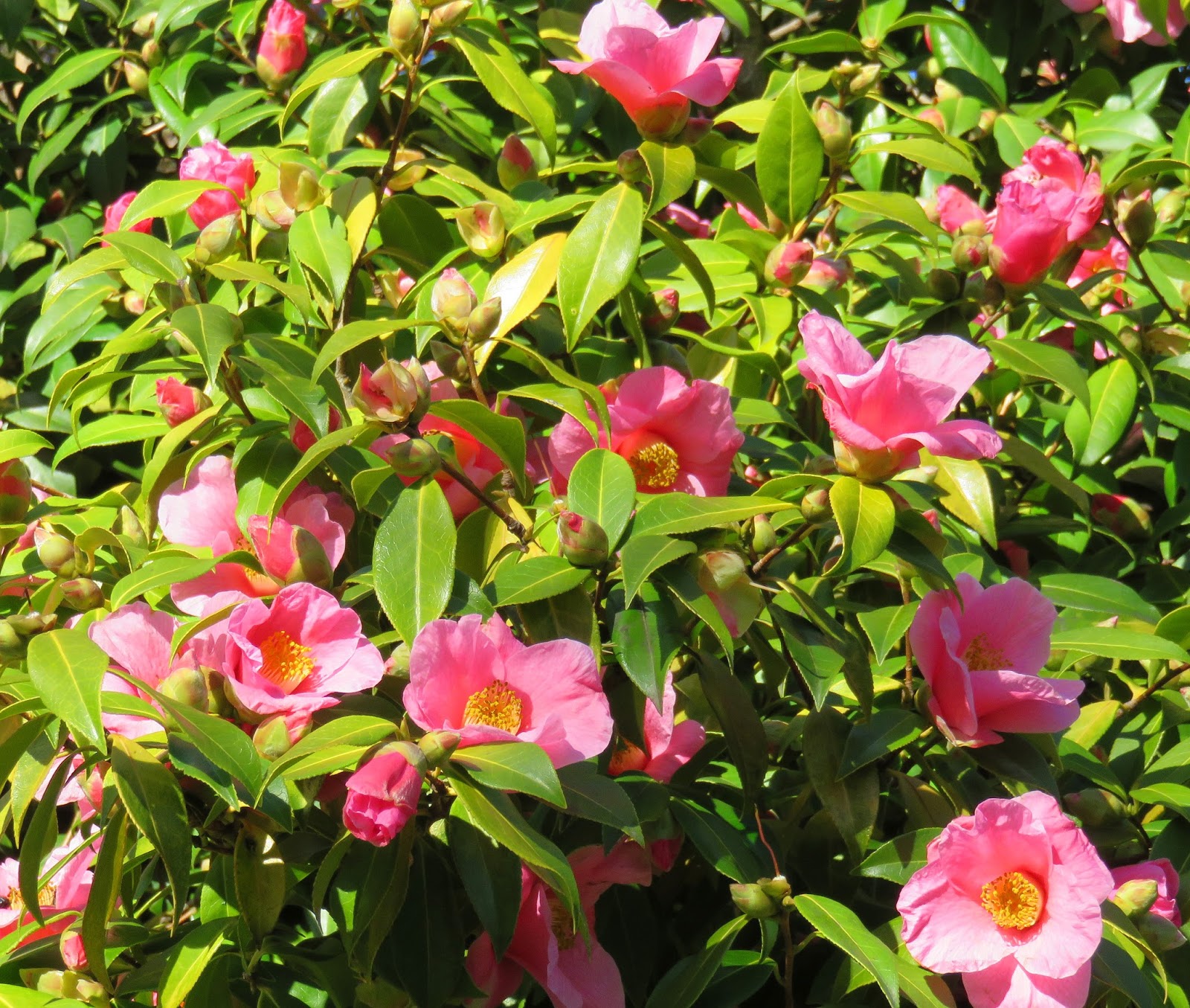
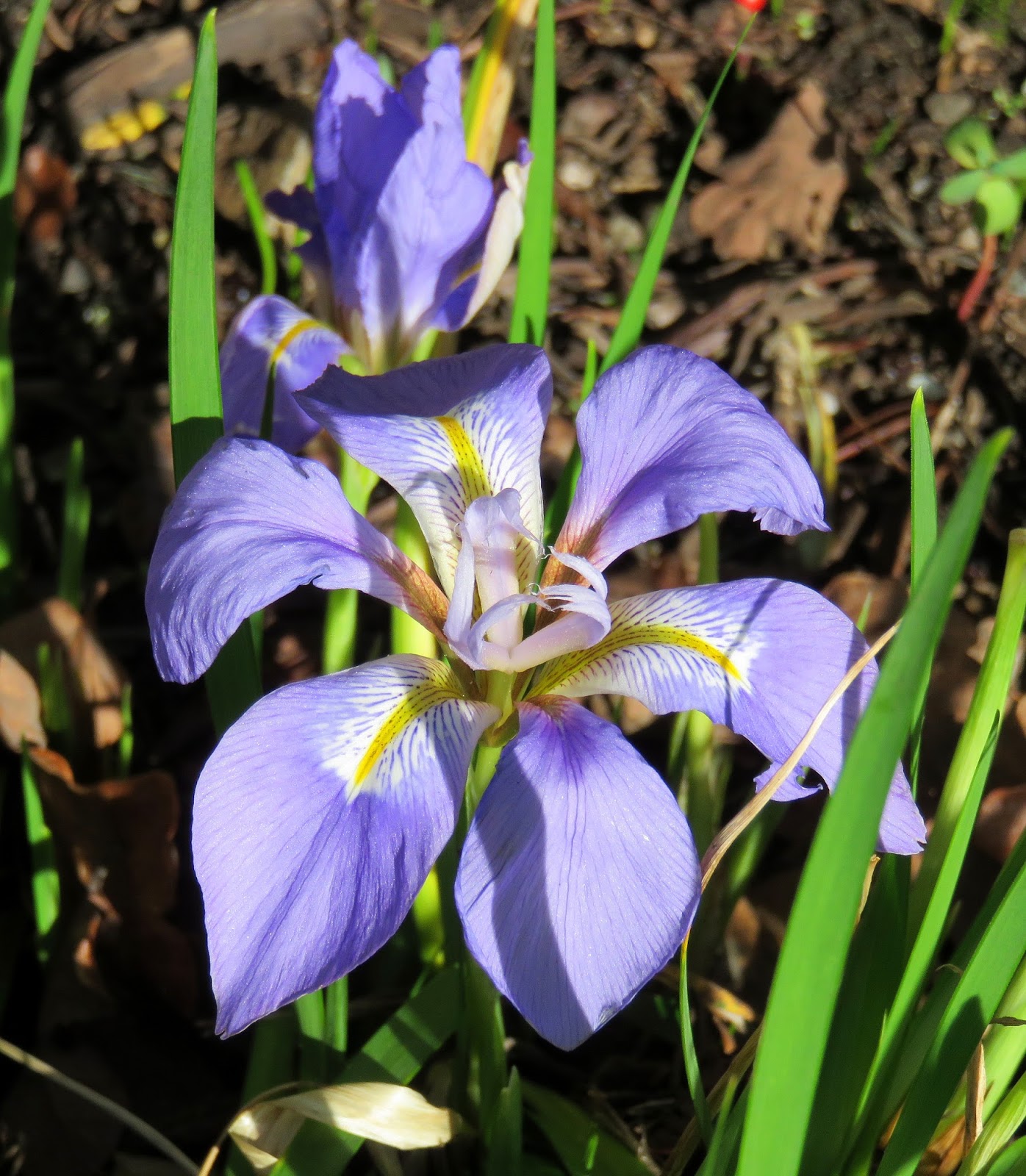
The other nice thing about February is that it's springtime!  Crocuses, daffodils, and rhodos are blooming, and the cherry blossoms are out.  Sometimes when we have mild weather in February, they will also get warm weather in Southern Alberta, with temperatures in the teens.  While that must be a nice break from the cold and the snow, it's so much nicer to enjoy the mild weather here when there is greenery and flowers everywhere!  Here's a few photos I took last week (February 8) around Victoria:

Rhododendrons at Beacon Hill Park

Camelias
Irises

Even the bees are out


Finally, here is a link to a great video that really sums up how nice February can be in Victoria.


Saturday, February 6, 2016

Climate change on the B.C. coast: What is the long term temperature trend in Victoria?

We've talked a lot about the current climate in Victoria, mostly using the most recent 30-year average (1981-2010).  Today, I'd like to look at the longer term picture.  How has the climate changed over time?  Luckily, in Victoria we are very well placed to look at long term trends thanks to the very long period of record at the Victoria Gonzales weather site.  It's  been gathering weather data since 1898 - nearly 118 years - making it the longest such record in B.C. and one of the longest on the west coast of North America.

Let's start by looking at the trend in mean annual temperature - the average of all high and low temperatures for the entire year.  In the chart below, the solid red  line shows the annual mean temperature for each year from 1899 to 2015, while the dashed blue line is the mean temperature for the entire period - 10.2 degrees.  The mean temperature has ranged from 8.6 degrees in 1916, the coolest year, to 11.7 degrees in 2015, the warmest year.  Clearly, there is a lot of variability from year to year, which makes it difficult to see the longer term trends.


To make it a little easier to see the longer term changes, the next chart uses a rolling ten-year average.  The first point on this chart is the average for 1899-1900, the next point is 1900-1910, and so on.  This smooths out the yearly fluctuations and you can start to see the trends.  One thing you'll notice is that the temperature appears to have fluctuated between warmer and cooler periods.  For example, it was generally much cooler than average in the 1910s and early 1920s.  This was followed by a warmer than average period in the 1930s and 1940s.  There was generally a cooler period again in the 1960s and 1970s, but then it became much warmer once again in the 1990s and 2000s.  One thing to note is that the cooler period in the 1960s and 1970s wasn't as cool as the earlier cool period, while the warmer period in recent decades has been warmer than the last warm period in the 1930s and 1940s.  So underlying these decadal fluctuations, there does seem to be an overall longer term warming trend.


This pattern is likely caused at least in part by the Pacific Decadal Oscillation (PDO).  This is a long term fluctuation in the temperature of the North Pacific Ocean which also leads to atmospheric changes that affect our weather.  In some ways, it is similar to El Nino, but whereas the cycle between El Ninos is usually a few years, the PDO cycle is more like 20-30 years.  Over the past century, the PDO was in a cool phase until about 1925, then a warm phase during 1925-47, followed by a cool phase during 1947-77, and then a warm phase during 1977-2007.  The chart below shows the PDO Index over this period.  You can see that it matches quite closely with the longer term temperature swings we've observed in Victoria.


In order to see the long range trend more clearly, the chart below uses a rolling 30-year average temperature.  The first point on this chart is the 1899-1929 average, the second point is the 1900-1930 average, etc. with the last point being 1985-2015.  Just as the 10-year rolling average smoothed out the year to year fluctuations, the 30-year rolling average smooths out some of the decadal fluctuations.  Now you can see that there has indeed been a long term warming trend, particularly over the past 40 years.  During this time, the 30-year average temperature has increased from 9.9 degrees for 1947-77 to 10.7 degrees for 1985-2015, so roughly a 0.8 degree warming.  That may not be as much warming as some other locations have experienced - the B.C. coast and the U.S. Pacific Northwest have generally seen less warming from global warming than other regions - but a 0.8 degree increase in a 30-year average temperature is very significant.


Interestingly, the amount of warming has varied quite significantly depending on which month you look at.  For example, there has been virtually no change in 30-year average temperatures during both September and December.  By contrast, Januarys have become much warmer, rising from a 1949-79 mean of 3.8 degrees to a 1985-2015 mean of 5.7.  That 1.9 degree rise over the past 40 years is more than double the increase in the annual temperature.  As a result, January has gone from being the coldest month of the year in Victoria to the second coldest, after December.

Another way to examine the warming trend is to look at extreme temperatures.  For example, Victoria recorded low temperatures  below -10 degrees in 19 winters during the period between 1898 and 1990 - about once every 5 winters.  However, the last time Victoria had a temperature below -10 was December 1990, meaning we have now experienced 25 winters in a row without getting down that cold.  Even temperatures below freezing are becoming much less common.  For the 1949-79 period, there was an average of 19 days each year with overnight lows below 0.  For the most recent 30-year period, that has dropped to an average of just 10 days each winter.

We can also look at the trend in annual snowfall as a surrogate for temperature.  The chart below shows the trend in 30-year average seasonal snowfall in Victoria.  You can see that it peaked in the 1950s and 1960s during the cold phase of the POD, but has declined significantly since then, dropping from more than 35 cm annually down to around 20 cm annually for the most recent 30-year period.