Showing posts with label sunshine. Show all posts

Friday, August 26, 2016

Which has a better climate - Victoria or Calgary

Our climate smackdown series continues.  We have already compared Victoria's climate with Vancouver and Toronto.  This time we'll look at Calgary.  

Let's start with precipitation.  On an annual basis, Calgary gets about 35%  less precipitation than Victoria - 419 mm in Calgary versus 641 mm in Victoria.    If you split that into rain and snow, Calgary gets barely half as much rain as Victoria (326 mm vs. 621 mm) but Calgary gets about six and a half times as much snow (129 cm vs. 20 cm).  

Calgary also greatly differs from Victoria in the seasonal pattern of its precipitation.  Victoria gets most of its rain in late fall and winter, while the late spring and summer is very dry.  In Calgary, the precipitation pattern is the opposite of this, with a very dry late fall and winter, but a decidedly wet late spring and summer.  You can see the difference in the chart below.  The driest six months in Victoria occur during the growing season, from April to September, with a total of just 137 mm, or 21% of the annual total during that period.  By contrast, April to September are the wettest six months of the year in Calgary, with 344 mm or about 82% of the annual total 
(and two and half times as much rain as Victoria gets during the growing season).   During Victoria's wettest months, in November, December, and January, it gets about ten times as much precipitation as Calgary, but during the dry summer months of June, July, and August, Calgary gets four to five times as much rain as Victoria.  While Victoria gets more annual precipitation than Calgary, Victoria, on average, is drier than Calgary during five months; May, June, July, August, and September,  One of the big reasons for the much drier summers in Victoria is the lack of thunderstorms: Calgary averages about 27 days annually with thunderstorms - nearly all between May and August - compared with about one day per year in Victoria.


We can also compare the frequency of precipitation.  For example, Victoria averages 133 days per year with measurable precipitation versus 112 days in Calgary. The chart below compares the % chance of measurable precipitation on any given day throughout the year.  There is much more seasonal variation in Victoria, ranging from 60% chance during November and December to a 10% chance in late July and early August.  The likelihood of precipitation has a smaller seasonal range in Calgary, from about 20% in November and December up to about 45% in June.  The chance of having a day with measurable rainfall is lower in Victoria from late April until mid-September.  From late-July until mid-August, Calgary is more than three times as likely as Victoria to get a rainy day.  During November and December, the reverse is true, with Victoria about three times as likely to get a day with precipitation compared with Calgary.


As noted earlier, Calgary gets more than 6 times as much snow as Victoria, with an average 129 cm annually in Calgary versus 20 cm in Victoria.  Snow also stays on the ground much longer in Calgary, with an average of 86 days each winter with at least 1 cm of snow on the ground compared with 5 days for Victoria.  Although on average, Victoria gets much less snow, it has had more really large snowfalls than Calgary.  The biggest one-day snowfall in  Calgary in the past 100 years was 48 cm in May 1981.  In Victoria, there have been three one-day snowfalls that exceeded 50 cm, in February 1916, February 1923, and December 1996.  

Calgary does beat Victoria in terms of sunshine, with an average 2,396 hours of sunshine annually, nearly 9% more sunshine than Victoria's 2,203 hours.  Victoria averages 315 days per year with at least some measurable sunshine; Calgary gets 333 such days.  Looking at the flip side, Victoria averages 50 days each year with no measurable sunshine while Calgary averages just 32 such days.  While Calgary gets more sunshine than Victoria on an annual basis, there are some important seasonal variations, as was the case with precipitation.  The chart below shows the % of possible sunshine, by month, throughout the year.  Victoria gets a much lower percentage of possible sunshine than Calgary during the winter months.  In December, for example, Victoria gets just 26% of possible sunshine hours while Calgary gets 46%.  However, from May through September Victoria gets a higher percentage of possible sunshine than Calgary.  Victoria's summer sunshine advantage peaks in July,  when it's sunny 69% of the time in Victoria compared with about 63% in Calgary. 


Now let's compare temperature.  Calgary, of course, has much colder winters, and it also has a  much greater seasonal variation in temperature compared with Victoria.  The chart below shows the average daily maximum temperature in Victoria versus Calgary.   Average maximum temperatures in Victoria range from 7 degrees in December to 21 degrees in July - a difference of about 14 degrees.   In contrast, maximum temperatures in Calgary range from -4 degrees in January to 25 degrees in July - a range of 29 degrees, or more than twice the range experienced in Victoria.  The average daily maximum temperature is warmer in Victoria from the beginning of September until mid-May.  The greatest difference is in  late January, when the average daily maximum is nearly 12 degrees warmer in Victoria compared with Calgary.  In contrast, in July the average daily maximum temperature is 3.5 degrees cooler in Victoria compared with Calgary.  (It should be noted that the numbers for Victoria are based on Victoria Gonzales, located right on the Strait of Juan de Fuca.  Away from the Strait, at the University of Victoria, the average high temperature in July is 23.8 degrees, nearly 3 degrees warmer than Gonzales and about the same as Calgary).  


The record maximum  temperature for Victoria is 36.0 degrees versus 36.1 degrees for Calgary.  Calgary gets an average of 87 days per year above 20 degrees and 5 days above 30 degrees.  In contrast, Victoria gets an average of just 50 days per year above 20 degrees and 1 day per year above 30 degrees.  Again, if you measure the temperature away from the Strait of Juan de Fuca (at the University of Victoria), it's more like 95 days above 20 degrees and 3 days above 30 degrees.  

The next chart shows average daily overnight low temperatures in Victoria versus Calgary.  Compared with Victoria, average overnight lows are cooler in Calgary throughout the year.  However, there is a much greater seasonal variation in Calgary, so there is a much greater difference between Victoria and Calgary in the winter.  Overnight temperatures range from about 3 degrees cooler than Victoria in the summer down to nearly 20 degrees colder than Victoria in the winter.  In Calgary, average overnight lows are below 0 from the mid-October until the end of April, and Calgary averages a whopping 194 days per year with overnight lows below freezing.  Victoria averages less than 10 such "frost days" per year.  


The coldest temperature ever recorded in Victoria was -15.6 degrees in December 1968.  On the other hand, Victoria has experienced 7 winters in the past 118 years when the temperature did not drop below freezing.  The coldest temperature recorded during the winter of 1925-26 was +1.1 degrees, making it the highest low temperature for any winter on record.  In Calgary, the lowest temperature ever recorded was -45 degrees.  The highest low temperature for any winter in Calgary was -22 degrees during the winter of 1986/87.  In Victoria, the average coldest temperature each winter is -4.8 degrees, while the average winter low temperature for Calgary is -34 degrees.  

So who wins the climate smackdown?  I think Victoria clearly wins in terms of temperatures.  While summer high temperatures are a little cooler in Victoria (at least near the water), Calgary is much colder in the winter, and overnight temperatures are colder in Calgary throughout the year.  On an annual basis, Calgary is drier and sunnier than Victoria (although Calgary gets much more snow).  However, during the warmer late-spring and summer months, Victoria actually gets less rain and more sunshine than Calgary.  While Victoria is much wetter and cloudier during the winter months compared with Calgary, it is also much warmer.  While the definition of best climate is subjective, I think Victoria wins this showdown: it has a sunnier, drier summer than Calgary and, in my opinion, a cloudier and wetter winter is a worthwhile trade-off for Victoria's much milder winter temperatures, 

Saturday, August 6, 2016

BC Day - the most reliable weather of the year in Victoria

I'm continuing my look at average weather on major holidays in Victoria.  We last looked at Canada Day - next up is BC Day.


BC Day doesn't fall on a specific day - it is the first Monday in August.  That means, it can fall anywhere from August 1 to 7.  For the purposes of this discussion, I will use the weather averages for August 1-7.  This period is right in the middle of the driest, sunniest, and warmest time of year in Victoria (which generally extends from mid-July to mid-August).  

Looking at the 1981-2010 period, there is just a 9.1% chance of measurable rain on BC Day.  By comparison, the chance of rain is 14.4% on Canada and 20.0% on Labor Day, so the BC Day long weekend is definitely the most reliable for camping or other outdoor activities.  In fact, Victoria's weather on BC Day is more reliably dry than any other city in Canada.  The chance of measurable rain on BC Day is nearly twice as high in Vancouver (16.7%), and nearly four times as high in Calgary (33.2%) and Toronto (33.3%).

BC Day is also generally the sunniest holiday in Victoria.  There is a 97.3% chance of getting measurable sunshine on BC Day in Victoria.  On average Victoria gets 10.5 hours of sunshine on BC Day, meaning that it is sunny about 72% of daylight hours.  That compares with 9.3 hours (60% of possible) on Canada Day.  While that's impressive, BC Day actually just misses the sunniest time of year in Victoria: during the last 10 days of July there is an average of 12.1 daily hours of sun, meaning it is sunny 81% of daylight hours during this period.  Again, Victoria is more reliably sunny on BC Day than other major cities across Canada.  While Victoria gets 72% of possible sunshine on BC Day, Vancouver and Calgary both average 63% and Toronto averages 58%.  Even Penticton in the "sunny Okanagan" averages just 62% of possible sunshine on BC Day.

The average high and low temperature for BC Day at Victoria Gonzales is 20.6/11.9 degrees, making it the warmest holiday of the year.  The warmest it's been during the first week of August is 32.8 degrees on August 6, 1942 (which was also the year Victoria had its hottest Canada Day on record).  The temperature gets above 20 degrees about half the time during the first week in August at Victoria Gonzales.  It's a different story if you  move inland in the Victoria region: at the University of Victoria, the average temperature during the first week in August is 24.0 degrees, and it gets above 20 degrees nearly 90% of the time during the first week in August, and above 25 degrees nearly 40% of the time.

Saturday, March 26, 2016

Which has a better climate - Victoria or Toronto?

Our climate smackdown series continues.  Next we'll compare Victoria's climate to Toronto's.  All the numbers below are based on stats for Victoria Gonzales and for Toronto City (not Airport numbers).  

Let's start with precipitation.  On an annual basis, Toronto gets about 30%  more precipitation than Victoria - 831 mm in Toronto versus 641 mm in Victoria.    If you split that into rain and snow, Toronto gets about 20% more rain than Victoria (741 mm vs. 621 mm) and about 6 times as much snow (122 cm vs. 20 cm).  

Besides getting more precipitation, Toronto also differs from Victoria in the seasonal pattern of its precipitation.  While Victoria has a very distinct rainy season (late fall and winter) and dry season (late spring and summer), precipitation in Toronto is more or less the same year round.  You can see the difference in the chart below.  Victoria gets about 50% more precipitation than Toronto in November, December, and January (318 mm vs. 207 mm).  Precipitation levels are about the same in both cities during the transitional months of February and March, and again in October. During the six months from April to September, Victoria gets less than one third as much rain as Toronto (137 mm vs. 451 mm).  The difference is particularly pronounced during June, July, and August when Victoria gets less than one quarter as much rain as Toronto.  One of the big reasons for the much drier summers is the lack of thunderstorms in Victoria: Toronto averages about 28 days annually with thunderstorms compared with about one day in Victoria.


We can also compare the frequency of precipitation.  For example, Victoria averages 133 days per year with measurable precipitation versus 145 days in Toronto. The chart below compares the % chance of measurable precipitation on any given day throughout the year.  Again, you can see there is much more seasonal variation in Victoria, ranging from 60% chance during November and December to a 10% chance in late July and early August.  The likelihood of precipitation has a much smaller seasonal range in Toronto, from about 50% in the winter down to about 30% in late summer.  The chance of having a day with measurable rainfall is lower in Victoria from early April until early October.  The gap is especially wide from mid-July until mid-August: if you're planning an outdoor event at this time of year it's about three times as likely to get rained out in Toronto compared with Victoria. 


As noted earlier, Toronto gets more than 6 times as much snow as Victoria, with an average 122 cm annually in Toronto versus 20 cm in Victoria.  Snow also stays on the ground much longer in Toronto, with an average of 68 days each winter with at least 1 cm of snow on the ground compared with 5 days for Victoria.  Although on average, Victoria gets much less snow, it has had more really large snowfalls than Toronto.  The biggest one-day snowfall in Toronto in the past 100 years was 48 cm in December 1943.  In Victoria, there have been three one-day snowfalls that exceeded 50 cm, in February 1916, February 1923, and December 1996.  

Victoria is also sunnier than Toronto, with an average 2,203 hours of sunshine annually versus 2,066 hours for Toronto.  Victoria averages 315 days per year with at least some measurable sunshine, leaving an average 50 days per year with no sun.  Toronto averages 60 days annually with no measurable sunshine.  The chart below shows the % of possible sunshine, by month, throughout the year.  Victoria gets a slightly lower percentage of possible sunshine than Toronto during the winter, from December until March.  However, from April to October Victoria gets a higher percentage of possible sunshine.  The difference is especially noticeable in July and August, when it's sunny nearly 70% of the time in Victoria compared with about 58% in Toronto. 


Now let's compare temperature.  While Victoria has  much greater seasonal variation in precipitation and sunshine compared with Toronto, the opposite is true for temperature.  The chart below shows the average daily maximum temperature in Victoria versus Toronto.   Average maximum temperatures in Victoria range from 7 degrees in December to 21 degrees in July - a difference of about 14 degrees.   In contrast, maximum temperatures in Toronto range from -2 degrees in January to 27 degrees in July - a range of 29 degrees, or more than twice the range experienced in Victoria.  The average daily maximum temperature is warmer in Victoria for half the year, from mid-April to mid-October.  The greatest difference is in mid-January, when the average daily maximum is nearly 10 degrees warmer in Victoria compared with Toronto.  In contrast, in July the average daily maximum temperature is 6 degrees cooler in Victoria compared with Toronto.  (It should be noted that the numbers for Victoria are based on Victoria Gonzales, located right on the Strait of Juan de Fuca.  Away from the Strait, at the University of Victoria, the average high temperature in July is 23.8 degrees, nearly 3 degrees warmer than Gonzales).  


The next chart shows average daily overnight low temperatures in Victoria versus Toronto.  The pattern is very similar to the daily high temperatures discussed above: there is a much greater seasonal range in Toronto, with average overnight lows ranging from -8 degrees in January to nearly 19 degrees in July (a 27 degree range).  In Victoria, overnight lows range from 3 degrees in December to 12 degrees in August (a 9 degree range, only one third of the range in Toronto).  Average overnight lows in Victoria exceed those in Toronto for an even longer period than the daytime highs do, from early October to early May.  In Toronto, average overnight lows are below 0 from the beginning of December to the end of March, and Toronto averages 101 days per year with overnight lows below freezing.  Victoria averages less than 10 such "frost days" per year.  


The coldest temperature ever recorded in Victoria was -15.6 degrees in December 1968.  On the other hand, Victoria has experienced 7 winters in the past 118 years when the temperature did not drop below freezing.  The coldest temperature recorded during the winter of 1925-26 was +1.1 degrees, making it the highest low temperature for any winter on record.  In Toronto, the lowest temperature ever recorded was -32.8 degrees.  The highest low temperature for any winter in Toronto was -13.1 degrees during the winter of 2005/06.  In Victoria, the average coldest temperature each winter is -4.8 degrees, while the average winter low temperature for Toronto is -20 degrees.  

The record maximum  temperature for Victoria is 36.0 degrees versus 40.6 degrees for Toronto.  Toronto gets an average of 50 days per year above 25 degrees and 13 days above 30 degrees.  In contrast, Victoria gets an average of just 8 days per year above 25 degrees and 1 day per year above 30 degrees.  Again, if you measure the temperature away from the Strait of Juan de Fuca (at the University of Victoria), it's more like 27 days above 25 degrees and 3 days above 30 degrees.  Either way, Victoria's summers are much cooler than Toronto's - and no humidity!

So who wins the climate smackdown?  I think it's pretty clear that Victoria wins in terms of more sunshine, less rain, and much less snow.  It also wins for having much milder winters.  However, the summer temperatures are more subjective.  Being a Victoria native, I love the cool summers here, but I know that some people prefer the heat in the summer.  Give me cool, dry and sunny over hot and muggy any day, although it would be nice to have a few more warmer summer evenings in Victoria!  Overall, I still have to give this one to Victoria.

Sunday, March 20, 2016

Which has a better climate - Vancouver or Victoria?

I thought I'd start a series of posts that compare Victoria's climate with the climate in other cities - call it a climate smackdown.

First up, is Vancouver.  I think most people in Victoria are aware that our climate is a lot drier and sunnier than Vancouver's thanks to the rain shadow, but I want to take a look in a bit more detail.

Let's start with precipitation.  As the chart below shows, Vancouver does get a lot  more precipitation than Victoria - an average of 1,560 mm annually vs 641 mm for Victoria.  That's almost two and a half times as much rain!  Vancouver gets more precipitation than Victoria throughout the year, but there are important variations.  During the late fall and winter rainy season from October to February, Victoria gets a little under half as much precipitation.  However, during the drier months, the difference is even greater, with Victoria getting less than one third as much rain as Vancouver between March and September.


The difference between Victoria and Vancouver is very distinct.  In both cities, precipitation has been recorded for almost 120 years.  During that time, the wettest year in Victoria was 1933, when 945 mm of precipitation was recorded.  Not only is Victoria's wettest year on record still drier than an average year in Vancouver (1,560 mm), but it is drier even than the driest year every recorded in Vancouver (962 mm in 1929).

We can also compare the frequency of precipitation.  For example, Victoria averages 133 days per year with measurable precipitation versus 166 days in Vancouver - so Vancouver averages about an extra month's worth of rainy days each year.  We can go even further and look at the number of hours with precipitation: Victoria averages 1141 hours while Vancouver averages 1658 hours - about 45% more.  Based on these numbers, most of the difference in total annual precipitation is not primarily because it rains more frequently in Vancouver, but because, when it does rain in Vancouver, the rain is on average nearly twice as heavy as when it rains in Victoria.

It's interesting to note that despite Vancouver having a reputation that it "rains all the time", the average 1658 annual hours with precipitation amounts to only about 19% of the time, while it's dry 81% of the time.   In Victoria, there is precipitation just 13% of the time while it's dry 87% of the time.  Even in the wettest winter month (December), it's dry 69% of the time in Vancouver and 78% of the time in Victoria.  During the driest month (July), it's dry 92% of the time in Vancouver and more than 95% of the time in Victoria.  The chart below shows the frequency of precipitation in Victoria and Vancouver throughout the year.


Vancouver gets nearly twice as much snow as Victoria, with an average 37 cm annually in Vancouver versus 20 cm in Victoria.  Victoria is more than twice as likely than Vancouver to experience a winter with little or no snow.  Over the past 30 years, Victoria has experienced 14 winters with less than 5 cm of snow for  the entire winter, compared with just 6 such winters for Vancouver.  Snow is also more likely to stay on the ground longer in Vancouver, with an average of 8 days each winter with at least 1 cm of snow on the ground compared with 5 days for Victoria.

Victoria is also sunnier than Vancouver, with an average 2,203 hours of sunshine annually versus 1,825 hours for Vancouver.  Victoria averages 315 days per year with at least some measurable sunshine, leaving an average 50 days per year with no sun.  Vancouver averages 76 days annually with no measurable sunshine - about 50% more than Victoria.  As with precipitation, the difference in annual sunshine between Victoria and Vancouver is quite distinct.  The cloudiest year on record in Victoria - with just 1,948 hours of sunshine recorded way back in 1914 - was still much sunnier than the average for Vancouver.  Conversely, the sunniest year on record in Vancouver - 2,109 hours recorded in 1987 - was still much cloudier than the average for Victoria.

Up to now, I think you can safely say that Victoria is clearly winning this climate smackdown.  But now we take a look temperature, and things become more complicated.  The chart below shows the average daily maximum temperature in Victoria versus Vancouver.  The average high temperature in Victoria is almost a degree warmer than Vancouver during the winter months, and it's about the same during the fall and early spring, but it is significantly cooler during the late spring and summer.  It's about 2 degrees cooler in July and August - averaging 20.5 degrees in Victoria versus 22.4 degrees in Vancouver.  The numbers in the chart are based on Victoria Gonzales, located right on the Strait of Juan de Fuca.  Away from the Strait, at the University of Victoria, the average high temperature in July and August is 23.7 degrees - more than 3 degrees warmer than Gonzales.  Nonetheless, Victoria is known for its relatively cool summers - particularly in the southern part of the region near the Strait of Juan de Fuca.  The Vancouver numbers are for Vancouver Harbour.  While this is also near the water, the Strait of Georgia is not nearly as cool as the Strait of Juan de Fuca during summer, so the cooling effect is less.  However, inland locations in the Vancouver region do have summer daytime highs that are 1-2 degrees warmer than the Vancouver Harbour numbers shown.


The next chart shows the average daily overnight lows in Victoria versus Vancouver.  Again, Victoria is nearly a degree warmer than Vancouver during the winter months.  Another way to look at this is to compare the average numbers of days each winter when the overnight low drops below freezing.  Vancouver averages almost twice as many "frost" days: 18.0 versus 9.5 for Victoria.  Victoria has experienced 7 winters in the past 118 years when the temperature did not drop below freezing for the entire winter.  Vancouver has never recorded a frost-free winter.  But while Victoria has warmer overnight lows in the winter, Vancouver has much warmer overnight lows during the summer.  During July and August, Victoria has an average overnight low of 11.8 degrees versus 14.4 degrees in Vancouver.  Victoria is definitely not known for its sultry summer nights!  Of course that could be a good thing if you don't have air conditioning!


What makes a good climate is quite subjective, but I think that overall Victoria beats Vancouver.  The drier, sunnier weather, with less snow and frost more than offsets the sometimes cool summer days and chilly summer nights.

Saturday, February 13, 2016

February blahs? Not in Victoria!

You often hear the term February blahs, especially from people in other parts of Canada who are tired of the cold, snow and slush, and they know that they probably have a couple more months of winter to endure.  I think this is the time of year when I am most appreciative of living in Victoria.  This may not be the nicest time of year in Victoria, but compared with most of the rest of Canada, it is heaven.  (It was -26 degrees in Toronto this morning, although granted that is very cold even for them!)


versus


As I mentioned in this post, while February is still the depth of winter in many parts of Canada, the coldest and dreariest point of the winter in Victoria tends to happen quite early, around the end of December.  By February, the weather is noticeably warmer, drier, and sunnier.  The average high temperature in February in Victoria is 9 degrees, a degree warmer than January and nearly two degrees warmer than December.

February is also noticeably drier, with an average of just 61 mm of precipitation compared with more than 100 mm each month in November, December, and January - the end of the rainy season is definitely in sight!  On average, there is a 43% chance of measurable precipitation on any given day in February (compared with than 50% in November, December, and January).  As I've said before, I think looking at the % chance of rain on any given day somewhat overstates how rainy it is, since a day with measurable precipitation doesn't necessarily mean rain all day - it could be a brief shower.  Another way to look at at this is the % of hours with measurable precipitation, and for Victoria in February there is precipitation just 19% of the time.

The sun is also making more of an appearance, with 98 hours of sunshine in a typical February in Victoria.  That works out to an average of 3.5 hours per day, compared with only 2.3 hours per day in January and 2.0 hours per day in December.  On average, February gets 22 days with at least some measurable sunshine, and overall, it is sunny about 35% of the time (at least during daylight hours!).  In other words, during daylight hours it's actually more likely for the sun to be shining February (35% of the time) than it is to be raining (19% of the time).

Snow is also pretty rare in February in Victoria.  Over the past 30 years, only 11 Februarys have seen any snow at all and just 5 of the past 30 Februarys saw significant snowfall (more than 10 cm).  When it does snow, it melts quickly; Victoria averages just 0.7 days with snow on the ground during February.

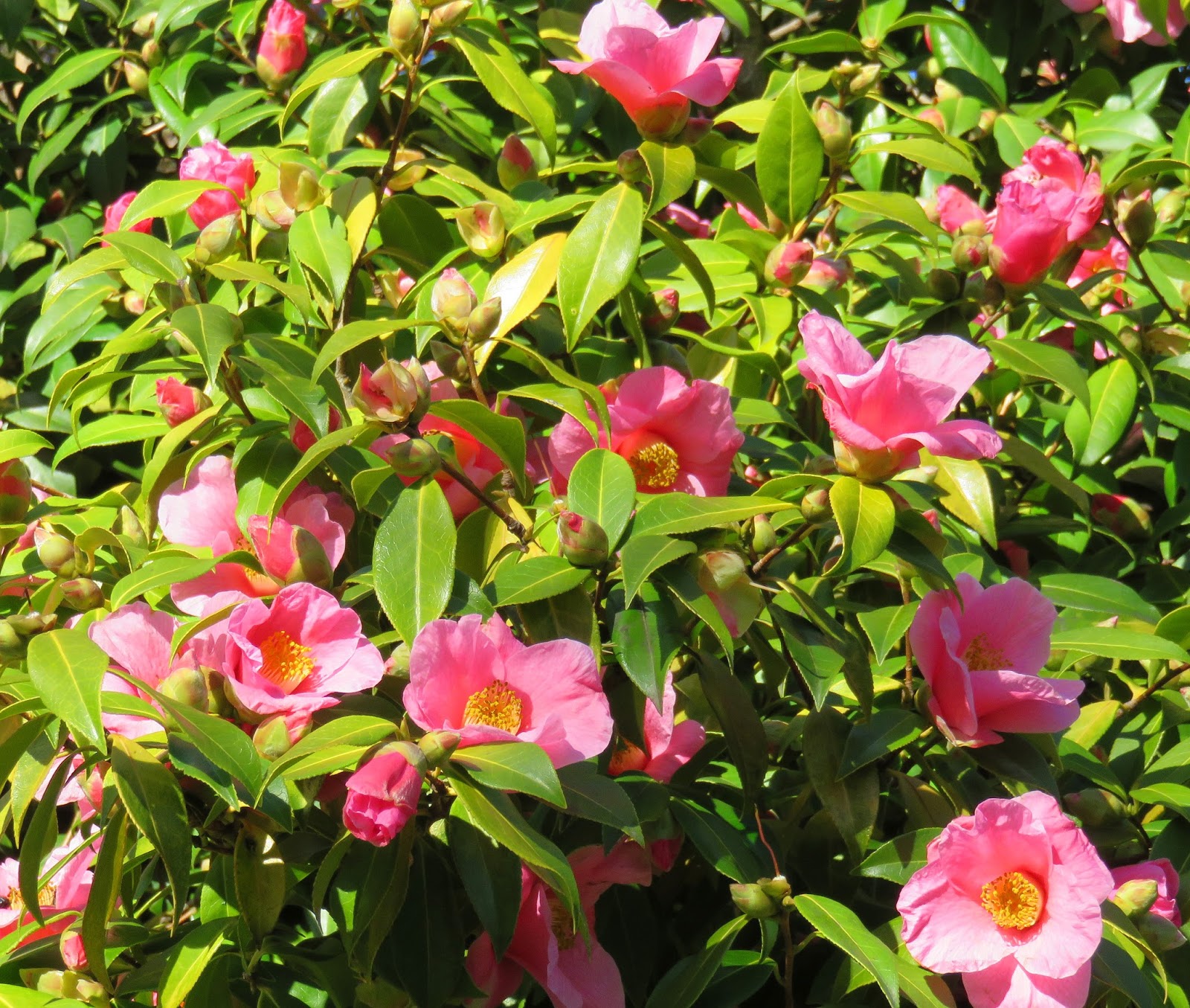
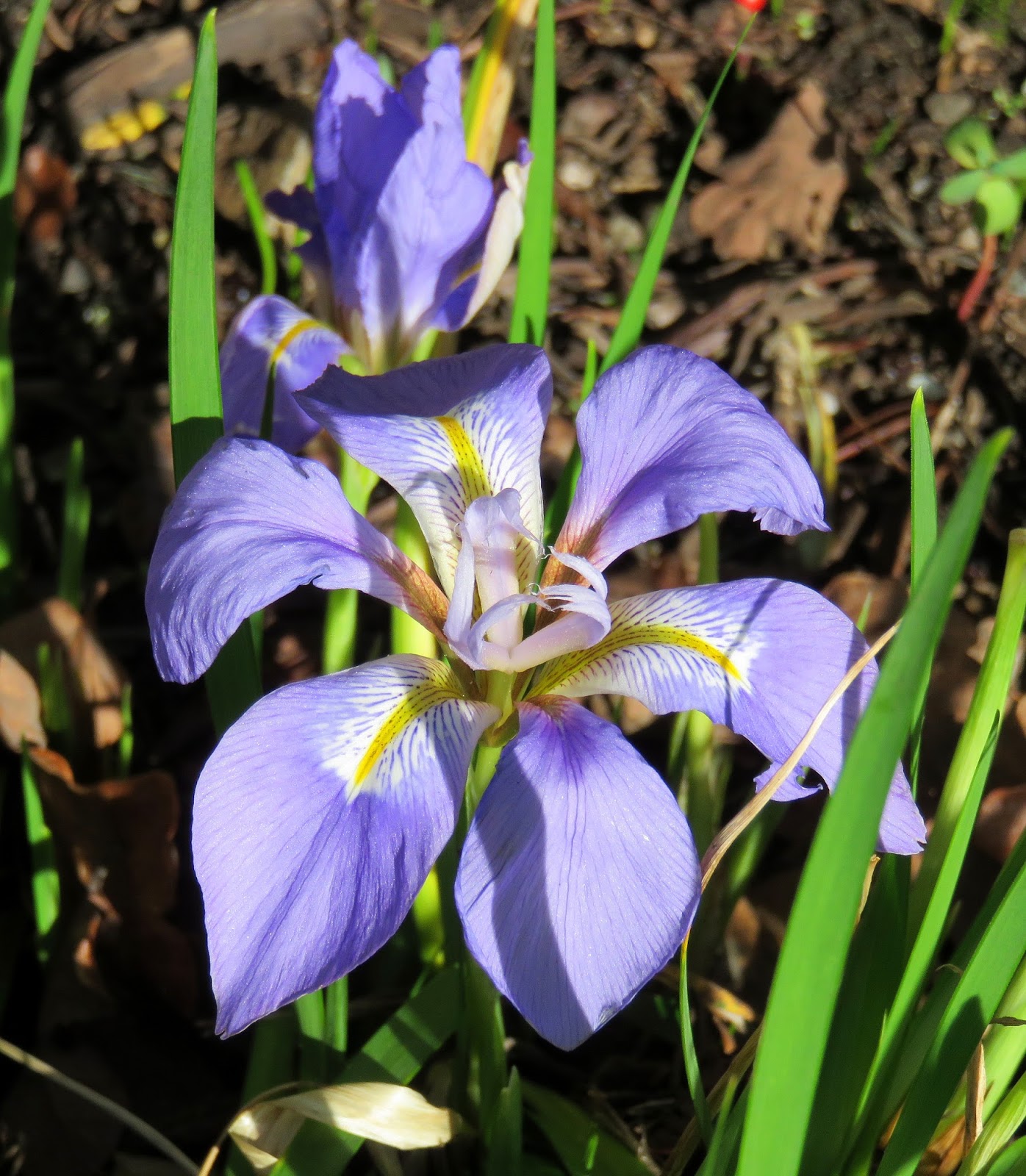
The other nice thing about February is that it's springtime!  Crocuses, daffodils, and rhodos are blooming, and the cherry blossoms are out.  Sometimes when we have mild weather in February, they will also get warm weather in Southern Alberta, with temperatures in the teens.  While that must be a nice break from the cold and the snow, it's so much nicer to enjoy the mild weather here when there is greenery and flowers everywhere!  Here's a few photos I took last week (February 8) around Victoria:

Rhododendrons at Beacon Hill Park

Camelias
Irises

Even the bees are out


Finally, here is a link to a great video that really sums up how nice February can be in Victoria.


Sunday, January 31, 2016

When the weather doesn't change: rainy streaks, dry streaks, cloudy streaks and sunny streaks

You've probably heard people say something like this:  "We have a saying around here.  If you don't like the weather, wait a minute."  Almost everywhere I've visited, I've heard some variant of this expression.  It always struck me as funny, because it implies some kind of unique changeability in the local weather, and yet people everywhere seem to say this!

I've certainly heard people say this about Victoria, but if anything, I think that what's more unique about Victoria's weather, at least compared with other places in Canada, is not its changeability - lots of places have changeable weather - but its stability.  For one thing, the temperatures tend not to fluctuate as much as they do in other parts of Canada.  In addition, we often get long stretches of similar weather, which can be both good and bad.  In the summer, we get long stretches of sunny, dry weather, but in the late fall and winter we often get long stretches of cloudy and rainy weather.  I thought I would take a look at the longest such stretches ever recorded in Victoria.


Let's start with precipitation.  The greatest number of consecutive days with measurable rainfall at the Victoria Gonzales weather station was 29 days: November 2-30, 2006.  Keep in mind that this doesn't mean it rained non-stop for 29 days; it just means that there was at least 0.2 mm of rain measured during each of those days.  That means it could be sunny all day, then a brief sprinkle of rain in the evening, and it would still be considered a day with measurable precipitation.  In fact, there was nearly 40 hours of sunshine recorded during this 29-day rainy streak, an average of nearly 1.4 hours per day.   Nonetheless, 29 days in a row with measurable rainfall is a long stretch!  The second longest stretch was 23 days and the third longest was 20 days.

On the flip side, the longest stretch without precipitation was 63 days, from June 15 to August 16, 1926.  The second longest stretch was 54 days, from July 17 to September 8, 1986.  During that stretch, there were 605 hours of sunshine recorded, or an average of 11.4 hours per day.  The third longest dry streak was 51 days, from July 7 to August 26, 1951.  Although shorter, that stretch came with even more sunshine: 653 hours, or an average of 12.8 hours per day.  There was a tie for the fourth longest dry streak: 46 days in both 1985 and 1991.  The latter streak is unusual in that it didn't occur during July or August; it was from September 1 to October 16, 1991.  Lengthy dry streaks are quite common in Victoria during the summer drought period.  Over the past 105 years, the average summer dry streak in Victoria has been 29 days.

Consecutive sunless days are actually much less common in Victoria than consecutive days with rainfall.  The longest stretch of days with no measurable sunshine was 9 days, from January 6-14, 1967.  You only need to have 0.1 hours of sunshine - 6 minutes - in a day in order for it to be considered a day with measurable sunshine, so you can see why really long stretches might be uncommon.  However, even if you look at consecutive days with less than 1 hour of sunshine, the longest stretch is still only 10 days, from December 8-17, 1980.  The longest stretch of days with less than 2 hours of sunshine is 12 days, recorded in both 1953 and 1971.  So you can see that long stretches with little or no sunshine are actually quite rare in Victoria.


Finally, if you look at the longest stretch of days with measurable sunshine, it was 124 days from May 27 to September 27, 1986.  Perhaps not surprisingly, this period included the record breaking 54 day dry streak discussed above.  Measurable sunshine is a pretty low bar, since you only need at least 0.1 hours of sunshine each day.  If you look at number of consecutive days with at least 8 hours of sunshine, the record is 32 days, from July 17 to August 17, 1977.  During this very sunny period, there were 434 hours of sunshine, and in fact all but one day during this period had more than 10 hours of sunshine and all but 5 days had more than 13 hours of sunshine.   Another remarkable sunny stretch occurred in 1985, when there was 635 hours of sunshine from June 15 to July 29, an average of 14.1 hours per day.  There was just one day during this 45-day stretch with less than 10 hours of sunshine, and a total of just 3 days with less than 12 hours of sunshine.  Perhaps not surprisingly, this stretch included most of July 1985, which was the sunniest calendar month on record at Victoria Gonzales, with 426 hours of sunshine.


Tuesday, January 26, 2016

What's the chance of rain and the likelihood of sunshine throughout the year in Victoria?

The chart below shows the % chance of precipitation and the % of possible sunshine on any given day during the year in Victoria.  It's really striking how the likelihood of precipitation and sunshine form a mirror image of each other.


Let's start by looking at the blue line - the chance of precipitation on any given day.  This starts in the 50-60% range during January and February, drops below 50% in March, and gradually declines until it reaches about 20% in June and early July.  Then we see something that is very distinctive of the climate in our area - a sharp drop down to about a 10% chance of rain on any given day from roughly the second week of July until mid-August.  That's definitely the time to plan your camping trip or outdoor event if you want to almost guarantee dry weather!  Beginning in mid-August, the chance of rain begins to increase, back to about 20% by the end of August, then gradually increases to about 25% by the end of September.  Unlike the spring, when there is a very gradual decrease in the likelihood of rain, the increase in the fall is much more abrupt, doubling from roughly 25% at the end of September to more than 50% by the end of October.  November and December put the chance of precipitation back in the 50-60% range where they started the year.

This pattern is quite different from other locations in Canada.  In Toronto, for example, the chance of precipitation on any given day varies much less throughout the year, from a high of about 50% during the winter months dropping to 30-35% during the summer.  The pattern is even more different in the Prairies.  In Calgary, there is only a 20-25% of precipitation on any given day during the winter months, but that increases to a 40-50% chance during June and July.

As I mentioned earlier, the % of possible sunshine in Victoria - the red line on the chart - follows almost the exact opposite pattern that chance of precipitation does throughout the year.  Victoria gets less than 30% of possible sunshine in December and January.  This gradually increases to about 60% by the beginning of May and stays at that level until the very beginning of July.  Then just as the chance of precipitation plummets from 20% down to 10% in the second week of July, the % of possible sunshine shoots up from about 60% to over 80%.  Again, this is the time to plan those outdoor activities!  The % of possible sunshine begins to drop off in the second week of August, and by the end of the month it is back down around 60%.  Possible sunshine declines very gradually at around 55% through September and the first half of October, then there is a sudden drop down to 30% by the beginning of November.  I've always noticed that the first half of October tends to have much nicer weather in Victoria than the second half -there's often a very abrupt change midway through the month - so it was nice to see this validated by the statistics!

In some ways, the seasonal pattern of sunshine in Victoria is quite similar to that in Toronto, where % of possible sunshine varies from about 30% during November, December, and January then gradually increases to around 60% in July before gradually declining once again.  The big difference is that Toronto doesn't experience Victoria's very high midsummer sunshine levels (80%).  So why is that?  As I explained in this post, the main reason is the North Pacific High, which tends to park itself over the northeastern Pacific in the summer months, deflecting weather systems to the north and providing Victoria with sunny, dry weather.  This is enhanced by the Olympic Mountain rain shadow and by Victoria's location surrounded by the cool water of the Strait of Juan de Fuca, which inhibits the formation of convective clouds and thunderstorms, resulting in exceptionally clear skies in the summer.  That's also why Victoria holds the record for the sunniest month ever recorded in Canada, outside the far north (in fact it holds the top three spots).

I should just mention one more thing.  While I have talked about the chance of precipitation and the % of possible sunshine as forming mirror images of each other, you should note that the way we're measuring chance of rain versus chance of sun is quite different.  For precipitation, we're looking at the % chance of any measurable precipitation on a given day.  That means a day where it there is a light shower for 10 minutes resulting in 0.2 mm of rain would be classed as a day with precipitation.  On the other hand, for sunshine we are not looking at the % chance of measurable sunshine, we are looking at % of possible sunshine.  The % chance of measurable sunshine would be much higher: throughout the year, Victoria averages about 51% of possible sunshine, but on average there is measurable sunshine (at least 0.1 hours) on 317.7 days, or 87% of days during the year.    So just keep in mind that while the chart above might make it seen like the likelihood of rain and sunshine is about the same in Victoria - just a mirror image - in fact we get a lot more hours of sunshine annually than we get daylight hours with rainfall.

Saturday, January 16, 2016

The Sunniest Month in Canadian History


I've already mentioned that Victoria is the sunniest place in B.C. and one of the sunniest cities in Canada.  Well, here's some more proof of just how sunny it is here.  I came across the following list of the sunniest months ever recorded in Canada.  (This is based on Environment Canada measurements from all ten provinces, but doesn't include locations in the territories  since some northern locations get 24 hour daylight in June and July.)  Amazingly, while the statistics came from hundreds of weather sites across Canada, Victoria Gonzales or Victoria Airport accounted for 5 of the 8 sunniest months on record, including the top 4 sunniest months ever recorded in Canada:

Station Month Hours
1 Victoria Airport July 2013 432.8
2 Victoria Gonzales July 1985 426.0
3 Victoria Gonzales July 1958 424.7
4 Victoria Airport July 1985 421.5
5 Manyberries, AB July 1985 414.0
6 Cranbrook, BC July 1985 413.0
7 Medicine Hat, AB July 1991 413.0
8 Victoria Gonzales July 1960 410.7

Sunshine measurements stopped at Victoria Gonzales in 1988.  Gonzales typically gets about 6% more sunshine than the Victoria Airport, so if we had still been measuring sunshine at Gonzales in 2013, there is a very good chance that it would have topped the amount at the Victoria Airport, which currently holds the title of sunniest month on record in Canada.  So if you lived in Victoria in July 2013, then you can rightly claim that you experienced the sunniest month ever recorded in Canada, outside the Arctic!  If you've lived in Victoria since 1958, then you have experienced the top 3 sunniest months in Canadian history!

So why is Victoria so sunny in the summer?  The main reason is the North Pacific High, which tends to park itself over the northeastern Pacific in the summer months, deflecting weather systems to the north and providing B.C.'s South Coast with generally sunny, dry weather.  In Victoria, this is enhanced by the Olympic Mountain rain shadow effect.  Victoria's location, surrounded by the cool water of the Strait of Juan de Fuca, also helps since it inhibits the formation of convective clouds (the type that form thunderstorms), resulting in exceptionally clear skies in the summer.

Friday, January 1, 2016

What is the sunniest location in British Columbia? Victoria

Victoria has a well-known reputation for having the mildest climate in Canada, but fewer people seem to be aware that it is also among Canada's sunniest cities, with an average annual 2,203 hours.  Sunshine was measured at Victoria Gonzales from 1914 to 1988, so this average was calculated based on the most recent 30-year period (1958-88) rather than the standard 30-year climate normal period (currently 1981-2010).

The Olympic Mountain rainshadow, discussed earlier for its impact on precipitation in Victora, also affects the amount of sunshine.  As winds flow down over the Olympics, the sinking air warms and dries, often resulting in a hole in the clouds.  In fact this is so prevalent that airplane pilots often use this "hole in the clouds" as part of the visual navigation in the region around Victoria.

Victoria is the sunniest city in B.C. and one of the sunniest cities in Canada.  Compared with 2,203 hours at Victoria Gonzales, the Victoria Airport averages 2,109 hours and Vancouver Airport gets 1938 hours.  People are often surprised that Victoria gets more annual sunshine than the "sunny Okanagan" and other spots in the B.C. interior, including Kelowna (1949 hours), Penticton (1923 hours), and Kamloops (2,080 hours).  Victoria also gets more sunshine than places like Toronto (2,066 hours), Montreal (2,051 hours).  In Canada, only Prairie cities like Calgary (2,396 hours) get more annual sunshine than Victoria.

Obviously, the  amount of sunshine varies throughout the year.  In part, this is due to the seasonal changes in day length: Victoria gets roughly 16 hours of daylight in late June, but only about half that amount in late December.  In addition, the percent of possible sunshine in Victoria varies significantly throughout the year.  In July, it's sunny in Victoria for 70% of daylight hours while in December it is only sunny for 24% of possible daylight hours.  As a result of these two factors, sunshine in Victoria ranges from an average 338 hours in July (nearly 11 hours per day on average) to just 63 hours in December (about two hours per day).  Late spring and summer tends to be very sunny in Victoria, and just four months - May, June, July, and August - account for 54% of Victoria's annual sunshine.  During the summer months, Victoria gets more sunshine than any other major city in Canada, including those on the Prairies.

On average, Victoria gets 317 days each year with  at least some measurable sunshine.  Not surprisingly, virtually every day in July -  30.3 out of 31 days - has measurable sunshine.  However, even in sometimes gloomy December, there is at least some sunshine on an average 20.5 out of 31 days.  On the flip side, Victoria gets just 48 days annually with no sunshine, compared with 76 days in Vancouver, 60 days in Toronto, and 32 days in Calgary.

The sunniest month on record at Victoria Gonzales was 426 hours in July 1985.  That works out to an average of nearly 14 hours of sunshine per day.  In July 2013, 432.8 hours of sunshine was recorded at the Victoria Airport - the sunniest month on record for any location in Canada (not including the Territories where northern locations can get 24 hours sunshine during the summer, resulting in very high monthly totals).  While sunshine was no longer being recorded at Victoria Gonzales in 2013, Gonzales on average gets about 6% more sunshine than the Airport, so there is a good chance that it received even more sunshine than the Airport site.  The least sunny month ever recorded at Victoria Gonzales was January 1982, with just 28.2 hours of sunshine - less than one hour per day.

The sunniest year on record in Victoria was 1951 when 2545 hours of sunshine were recorded, making it the sunniest year recorded for any location in B.C.  The least sunny year in Victoria was way back in 1914 with just 1948 hours of sunshine, but keep in mind that this is still more than the average annual sunshine in Vancouver.

Hours % possible Days with measurable
Jan 69.8 25.5% 21.3
Feb 97.9 34.1% 22.5
Mar 152.9 41.5% 27.9
Apr 195.7 47.8% 28.7
May 274.0 58.2% 29.9
Jun 281.9 58.6% 28.8
Jul 338.3 69.7% 30.3
Aug 294.3 66.2% 29.6
Sep 206.5 54.5% 28.2
Oct 145.9 43.4% 26.5
Nov 82.6 29.7% 22.6
Dec 63.2 24.3% 20.5
Annual 2202.9 46.3% 316.8